A Puppy’s First Year: A Veterinarian’s Checklist for a New Owner
When a puppy arrives home, usually at 8–12 weeks of age, it is important to allow it to settle in calmly. However, the first visit to the veterinarian often comes soon after arrival, as health monitoring and the vaccination programme begin at an early stage.
Owners should initially observe the puppy’s eating, drinking, and bowel movements. A puppy’s digestive system is sensitive, and changes in diet, for example, should always be introduced gradually.
The Importance of the Vaccination Programme
A puppy’s vaccination programme is an essential part of its healthcare and future protection, as the development of the immune system is critical during puppyhood.
Vaccinations are recommended at the following ages:
- 6–8 weeks of age: The first combination vaccine (protecting against distemper, infectious hepatitis, parvovirus, and kennel cough).
- 12 weeks of age: The second dose of the combination vaccine.
- 16 weeks of age: The third dose of the combination vaccine – this provides additional protection and strengthens the puppy’s immune system. The rabies vaccine is also administered at this time if it has not been given earlier.
- 1 year of age: A booster vaccination to ensure long-lasting immunity.
The same vaccination schedule also applies to kittens.
We recommend following the vaccination programme carefully. In addition to protecting your pet’s health, vaccinations are also important for public health, as some canine diseases, such as rabies, are zoonotic and can be transmitted from animals to humans.
You can read more about vaccinations here.
Deworming and Intestinal Parasites
Before vaccinations, the puppy should be treated against intestinal parasites. The breeder has usually taken care of the early deworming treatments, but the owner must continue them according to the veterinarian’s instructions.
Modern recommendations often rely on examining a faecal sample, but during puppyhood routine deworming is often justified, as roundworms can slow a puppy’s growth and weaken its immune system.
Teething
A puppy’s baby teeth begin to change into permanent teeth at around 4–6 months of age. During this time, it is advisable for the owner to check the puppy’s mouth regularly.
Sometimes baby teeth, especially canine teeth, do not fall out on their own, which can cause bite problems and gum inflammation. The experts at Pups ’n Pets recommend having the teeth checked by a veterinarian if a baby tooth does not appear to loosen when the permanent tooth begins to erupt.
Socialisation and Practising Veterinary Visits
Socialisation is the most important developmental stage in a puppy’s life and forms the foundation for a balanced adulthood. It involves gradually introducing the puppy to people, other dogs, sounds, and different environments during its sensitive developmental period.
The goal is for the puppy to learn to approach new situations with curiosity and confidence rather than fear. As part of this broader socialisation process, it is also important to practise handling the pet and visiting unfamiliar places.
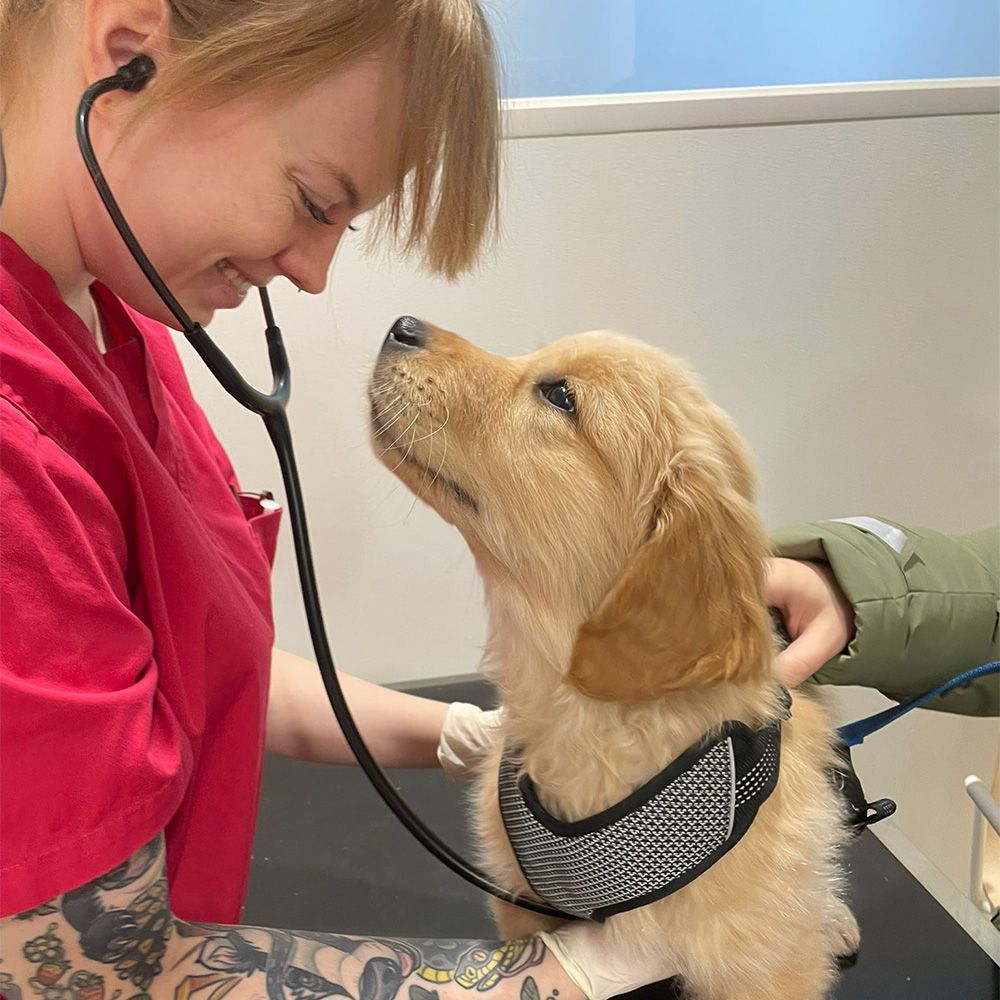
The first year is the best time to teach both dogs and cats that visiting the veterinarian can be a positive experience. During visits, the puppy may be weighed, gently handled, and given treats.
When being on the examination table and being handled by unfamiliar people become familiar through positive experiences, future fear and anxiety can be avoided and the puppy’s healthy development is supported.
Growth and Nutrition
A puppy’s nutrition is one of the most important factors affecting its health. A growing puppy needs more energy, protein, and minerals than an adult dog, but the intake of nutrients must remain balanced. Too little nutrition can slow development, while excessive energy intake may lead to overweight or overly rapid growth, which can be harmful to the skeleton.
At first, a puppy should be fed several times a day (usually 3–4 meals) so that its small stomach can process the required amount of food and maintain stable blood sugar levels. It is recommended to use complete food specifically designed for puppies at least until the age of one year, as it is formulated to meet the nutritional needs of growth.
If you want to change the puppy’s food brand, do so gradually over 7–10 days to avoid digestive upset. We are happy to help you choose the most suitable diet for your new family member.
Let’s ensure a safe start in life for your puppy together
At Pups 'n Pets, we understand that a new puppy owner has many questions in mind. That’s why we offer a calm and unhurried service where every puppy is treated as an individual.
We use modern diagnostic tools and have an experienced team to ensure that vaccinations, health checks, and any early treatment needs are handled with professionalism and genuine care. Truly caring for both the pet and its owner, and building a lasting relationship of trust, are very important to us.
We have veterinary clinics in Jätkäsaari and Kalasatama in Helsinki. Contact us and book your puppy’s first health check or vaccination visit.
You can also easily book an appointment online: